
How to Get Streak-Free Floors and Windows Every Time
The Chemistry of Streaking: Why Supermarket Sprays Fail
Most commercial grocery store glass and floor cleaners contain synthetic fragrance oils, surfactants, and petroleum-based gloss enhancers. While they smell pleasant upon application, these additives do not evaporate completely. Instead, they leave microscopic chemical residues on glass and floor finishes.
When light hits glass at an angle, or footsteps press against polished hardwood, those unevaporated surfactants smear into visible cloudy streaks. Furthermore, Suffolk County tap water in communities like Selden, Coram, and Smithtown contains calcium carbonate and magnesium. When mixed with generic detergents, these minerals crystallize on surfaces, forming stubborn hazy deposits that resist simple wiping.
The Professional Glass Cleaning Protocol: The Squeegee S-Method
Professional window cleaners almost never rely on blue aerosol sprays or paper towels. Paper towels contain wood pulp lint and adhesive binders that transfer directly onto glass. Follow this professional multi-step sequence:
- Pure Deionized Solution: Mix distilled water with a quarter-teaspoon of pure neutral castile soap or a professional non-foaming wetting agent.
- Lambswool Agitation: Apply the solution with a microfiber or lambswool scrubber to dissolve pollen, salt spray, and insect splatter.
- Dual-Durometer Rubber Squeegee: Place the squeegee blade at a 45-degree angle in the upper corner, pulling downward in continuous fluid S-curves across the pane without breaking contact.
- Microfiber Edge Detailing: Use a dry, lint-free waffle-weave microfiber cloth to wipe the perimeter frame and catch single water droplets.
Hardwood and Tile Flooring: The Two-Bucket Microfiber Method
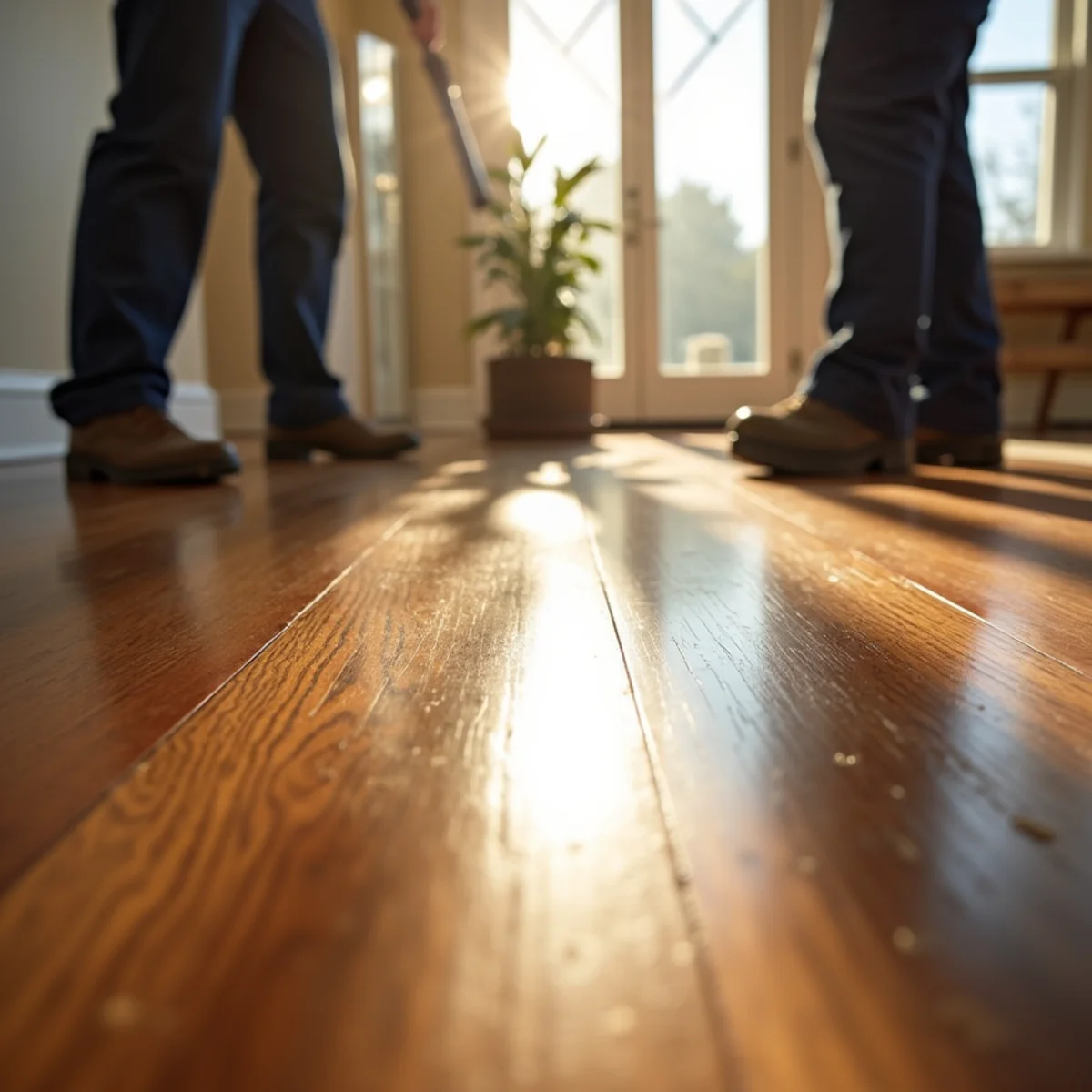
Traditional string mops and single-bucket water systems are the primary culprits behind hazy, sticky flooring. When you dip a dirty mop into soapy water and drag it across your floor, you are simply spreading suspended soil and detergent evenly over the surface.
| Flooring Type | Common Streaking Cause | Professional Cleaning Solution |
|---|---|---|
| Porcelain & Ceramic Tile | Hard water mineral film, dirty mop water in grout lines | Two-bucket wash system, demineralized rinse, squeegee extraction |
| Luxury Vinyl Plank (LVP) | Polymer polish buildup, chemical residue | Alcohol-vinegar dilution, microfiber cross-grain wiping |
| Polished Marble / Travertine | Acid etching from lemon/vinegar cleaners | Specialized stone soap, micro-fiber flat mop, distilled water rinse |
Mo Saeed's Advice: The Zero-Residue Floor Rule
Mohsin 'Mo' Saeed shares an insider principle honed over thousands of Long Island residential visits:
'Homeowners often believe that more soap equals cleaner floors. In reality, the opposite is true. If your floor feels tacky or shows footprints immediately after drying, you have soap buildup. At JM Cleaning Group, we use precise dilution ratios and demineralized rinses that leave zero residue behind. When the floor dries, you are looking at raw, clean polyurethane or glazed tile — not chemical film.'
Combating Coastal Salt and Pine Barrens Pollen
Long Island presents two unique environmental challenges for windows and glass:
- Coastal Salt Spray: On the South and North Shores, ocean mist deposits sodium chloride onto exterior windows, creating a sticky base that traps dirt. This requires an initial fresh-water rinse before squeegeeing to prevent glass scratches.
- Pine Barrens Fine Pine Pollen: In spring across central Suffolk, powdery yellow pollen adheres to exterior screens and glass. Screens must be removed and washed separately; otherwise, the first rainfall transfers all screen grime right back onto your spotless glass.
Schedule Professional Window and Floor Detailing
Tired of fighting streaks on tall two-story foyer windows or extensive open-concept hardwood floors? Dispatched from 43 Biscayne Drive in Selden, JM Cleaning Group brings commercial-grade equipment to restore diamond clarity to your glass and floors. Call 877-754-5614 for a free estimate.
The Physics of Microfiber: Why Terry Cloth and Paper Towels Fail
Standard cotton terry towels and disposable paper towels consist of large, circular cellulose fibers that push surface water and dissolved dirt across glass and hardwood rather than lifting it. Furthermore, cotton rags shed microscopic lint that electrostatic charges bind to newly washed surfaces.
Professional split-microfiber cloths are engineered with microscopic wedge-shaped polyester and polyamide strands measuring 1/16th the diameter of a human hair. These wedge fibers generate capillary suction, pulling grease, mineral dust, and moisture deep into internal micro-channels where it remains trapped until laundered. Wiping with dry waffle-weave microfiber polishes glass to an optical clarity that paper towels simply cannot achieve.
Related Services & Local Areas Mentioned in This Guide:
About JM Cleaning Group
Led by Mohsin “Mo” Saeed, JM Cleaning Group has provided professional residential and commercial cleaning across Selden and Long Island since 2018. Rated 4.6★ on Google across 32+ verified reviews.